
ASA (Acrylonitrile Styrene Acrylate) and ABS (Acrylonitrile Butadiene Styrene) are two of the most closely related engineering-grade thermoplastics used in modern manufacturing and industrial FFF (Fused Filament Fabrication) 3D printing. Because they melt at similar temperatures, share comparable price ranges, and are regularly specified for identical categories of structural parts, choosing between them can often feel like a minor technical detail.
However, in practice, the factor that separates ASA from ABS is almost always the end-use environment. Where your finished part will live—exposed to outdoor weathering or protected inside an indoor chassis—determines which material succeeds and which one suffers premature structural failure.
[H2] Understanding the Structural Chemistry: What is the Difference Between ASA and ABS?
Both ASA and ABS are engineered terpolymers built on a core of acrylonitrile and styrene. The crucial structural difference lies in the third elastomeric monomer integrated into the polymer chain:
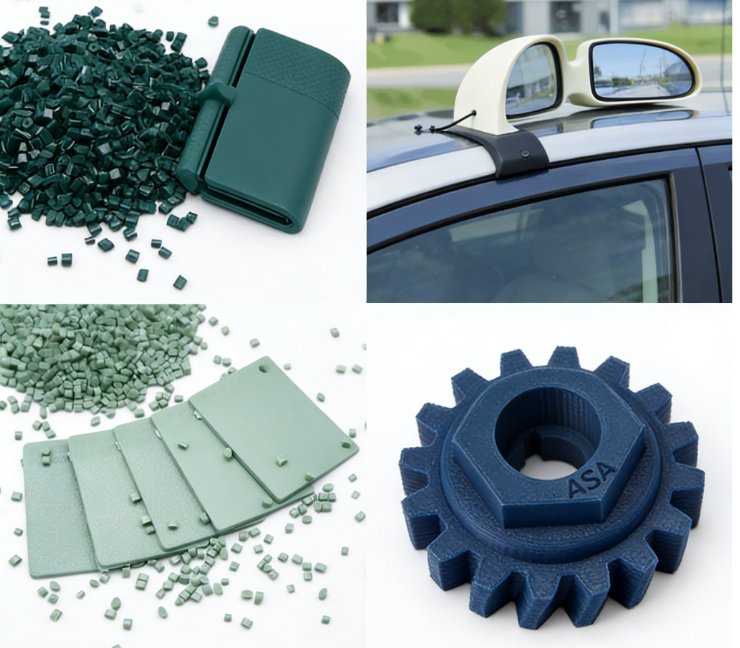
ABS (Butadiene Elastomer): ABS utilizes butadiene rubber as its impact modifier. While butadiene provides excellent toughness, elasticity, and impact resistance, it contains highly reactive double bonds that easily break down when exposed to ultraviolet (UV) radiation.
ASA (Acrylate Elastomer): ASA replaces the vulnerable butadiene rubber with an acrylic ester elastomer (specifically an alkyl acrylate). This acrylic component provides natural, exceptional resistance to UV radiation and thermal oxidation while retaining high impact strength.
[H2] Performance Breakdown: Weatherability, Toughness, and Heat Deflection
Choosing the correct polymer grade requires balancing mechanical performance against environmental wear:
1. Extreme UV and Weathering Defense
ABS is highly vulnerable to natural sunlight. Continuous UV exposure causes the butadiene phase to degrade, resulting in surface yellowing, a chalky texture, and a major loss in structural impact strength. Within months of outdoor exposure, ABS parts can turn highly brittle and snap under minimal load.
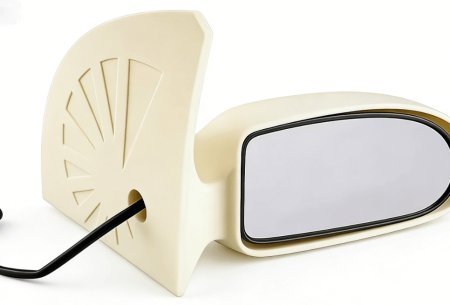
ASA was formulated specifically to solve this UV degradation problem. Its acrylic ester backbone naturally resists solar radiation. Outdoor ASA parts retain their color, surface finish, and mechanical integrity even after years of continuous exposure to harsh sunlight, rain, and temperature swings.
2. Thermal Defense and Warping Behavior
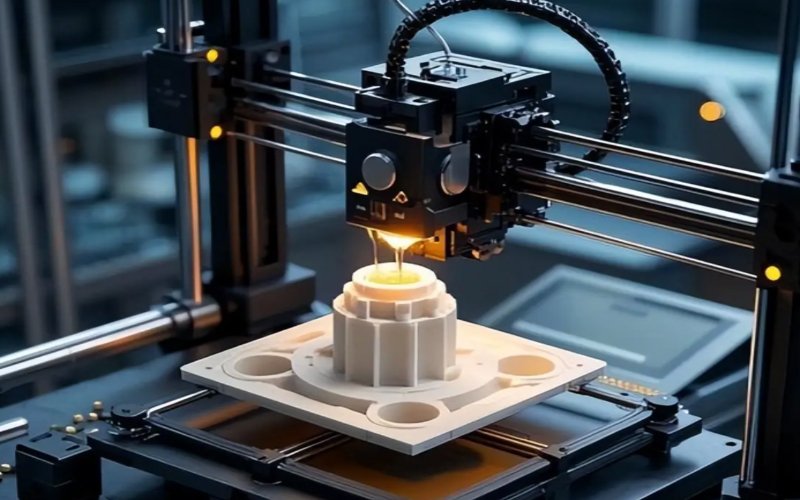
Both polymers offer respectable thermal thresholds compared to standard materials like PLA or PETG. Generally, ASA maintains a slightly higher heat deflection temperature (HDT) range up to 86°C to 94°C (depending on load), while ABS typically ranges from 75°C to 90°C. During processing, ASA exhibits superior dimensional stability and a lower warping tendency compared to ABS, making it highly reliable for large-format molding and printing runs.
[H2] Technical Specification Overview: ASA vs. ABS Materials
Performance & Processing Property | ASA (Acrylonitrile Styrene Acrylate) | ABS (Acrylonitrile Butadiene Styrene) |
UV & Weather Resistance | Excellent — Engineered specifically for long-term outdoor exposure. | Poor — Degrades, yellows, and becomes brittle under sunlight. |
Average Impact Strength | ~30 kJ/m² — Highly durable with excellent energy absorption. | Slightly Higher — Butadiene rubber phase adds marginal toughness. |
Heat Deflection Temp (HDT) | 86°C - 94°C — Remains stable under higher continuous thermal loads. | 75°C - 90°C — Highly stable, but lower thermal range under load. |
Molding & Print Warping | Lower Tendency — Superior dimensional stability for large-scale builds. | Higher Tendency — More prone to thermal shrinkage and edge curling. |
Typical Chemical Resistance | Resists dilute acids, engine oils, and aqueous cleaning solutions. | Resists dilute acids, mineral oils, and common household chemicals. |
[H2] Partner with a Certified Source Compounding Factory
While choosing the right filament matters for 3D printing, the quality of your finished part always starts with the raw plastic granules. Qingdao Zhongxin Huamei Plastic Co., Ltd. is an established, 30-year modified engineering plastics compounding enterprise operated as an official joint venture with CHIMEI.
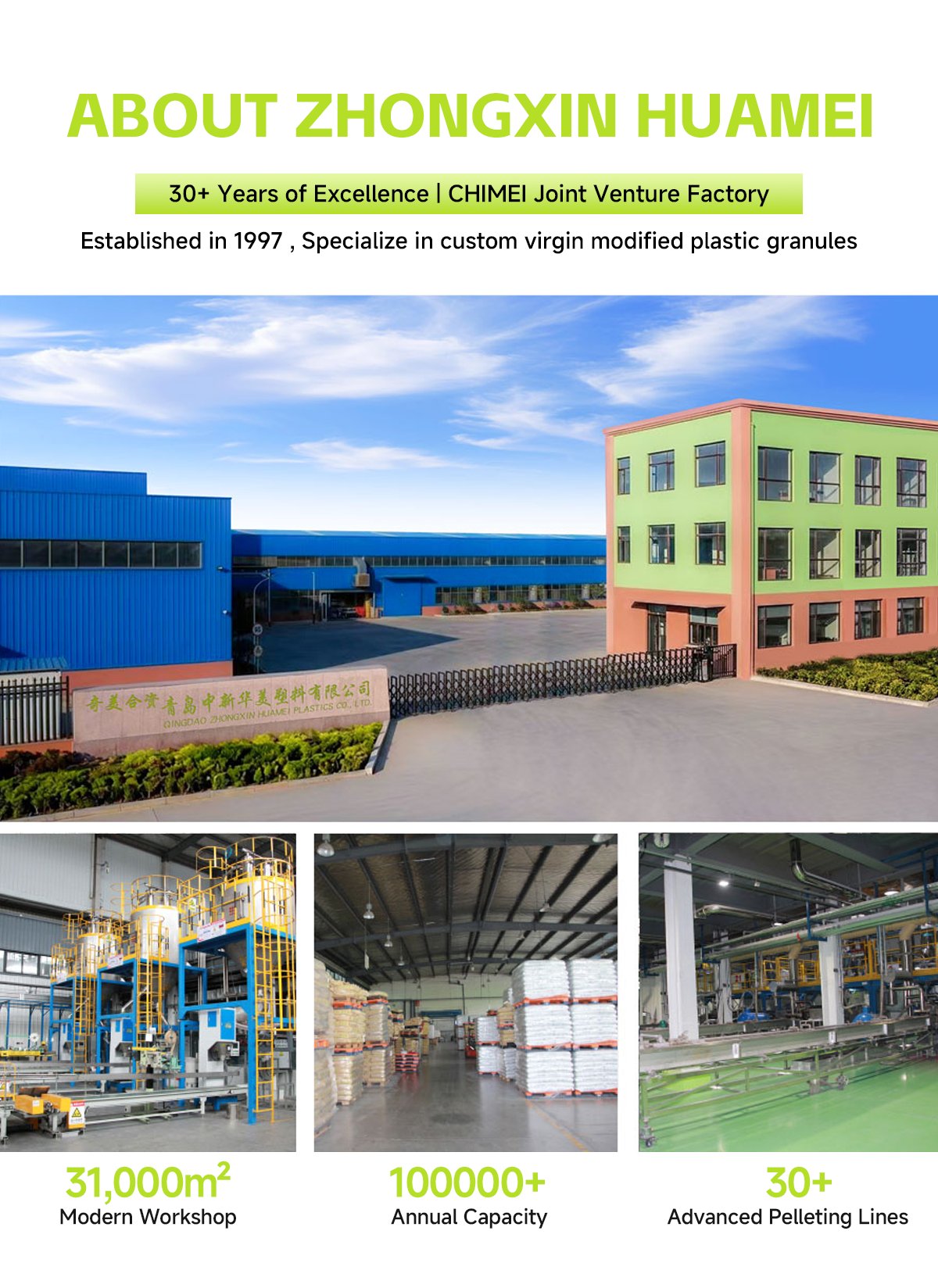
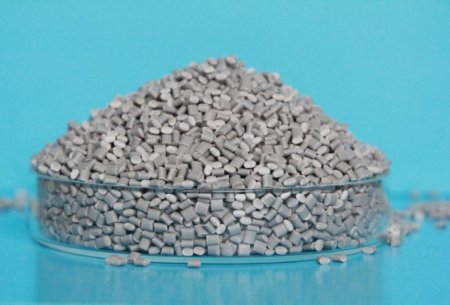
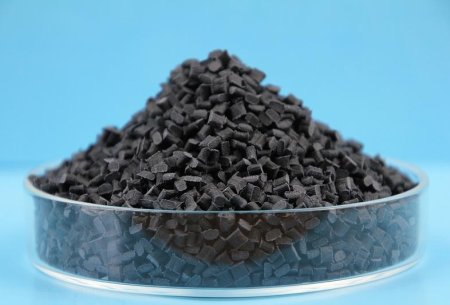
We specialize in manufacturing high-purity, modified ASA and ABS plastic pellets optimized for both high-precision filament extrusion lines and direct industrial injection molding. Backed by 30 automated compounding lines and a central MES production monitoring system, we ensure that every batch of material achieves absolute physical property consistency, lifting final processing yield rates by approximately 5%. Whether you require customized UV stabilizers, specialized flame retardants, or custom precision color matching, our PhD-led engineering team is ready to formulate the perfect polymer for your project.
Request a Technical Datasheet & Custom Sample Compounding Batch
Direct Compounding Source: Qingdao Zhongxin Huamei Plastic Co., Ltd.
Global Hotline Support & WhatsApp: +8618765279757 (WeChat Available)
Official Corporate Email: info@qdzxhm.com.cn
Supported Commercial Shipping Terms: FOB / EXW Direct Factory Dispatched
Available Material Modifications: Custom Glass Fiber Reinforcement, Flame Retardant Additions, High-Efficiency UV Stabilization, Tailored Flow Index Calibration for Filament Extrusion.