
As the global polymer additive manufacturing industry accelerates, high-format industrial 3D printing places strict demands on the mechanical strength, thermal endurance, and dimensional stability of raw print media. Traditional wooden patterns and unreinforced commodity polypropylene (PP) suffer from high thermal cooling shrinkage, severe printed warpage, layer delamination, and susceptibility to moisture decay. These defects make standard polymers unsuitable for heavy-duty industrial tooling and foundry mold production.
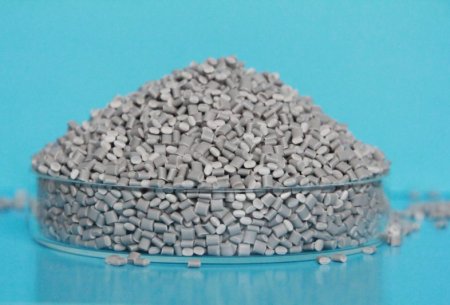
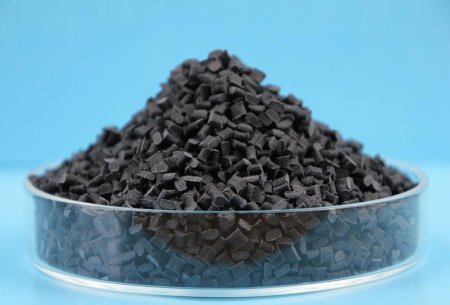
To solve these large-format additive manufacturing challenges, Qingdao Zhongxin Huamei Plastic Co., Ltd. provides engineered glass fiber reinforced PP resin, specifically optimized for Fused Granular Fabrication (FGF) direct pellet printing and Fused Deposition Modeling (FDM) industrial 3D printing of foundry patterns, cast iron mold tooling, and functional structural prototypes.
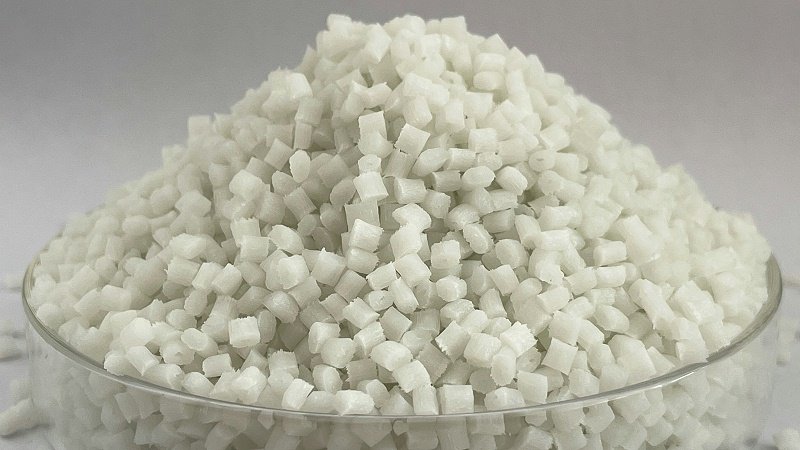
What Key Challenges Impact Industrial 3D Printed Molds and Tooling?
Foundry pattern makers, tool engineers, and industrial print service bureaus face strict material limits when replacing traditional timber patterns with 3D printed polymer structures:
Cooling Shrinkage and Bed Warpage: Large surface area prints experience severe differential thermal contraction, causing corner lifting, platform detachment, and lost dimensional tolerances.
Layer Delamination under Load: Weak Z-axis interlayer bonding causes 3D printed molds to crack or shear under heavy foundry sand packing forces and mechanical handling.
Thermal Distortion in High-Heat Environments: Lower-grade polymers soften under heat exposure, distorting complex mold cavities and core alignments.
Poor Secondary Machinability: Inconsistent resin density or surface fuzzing makes post-print CNC milling, drilling, and smooth surface finishing difficult.
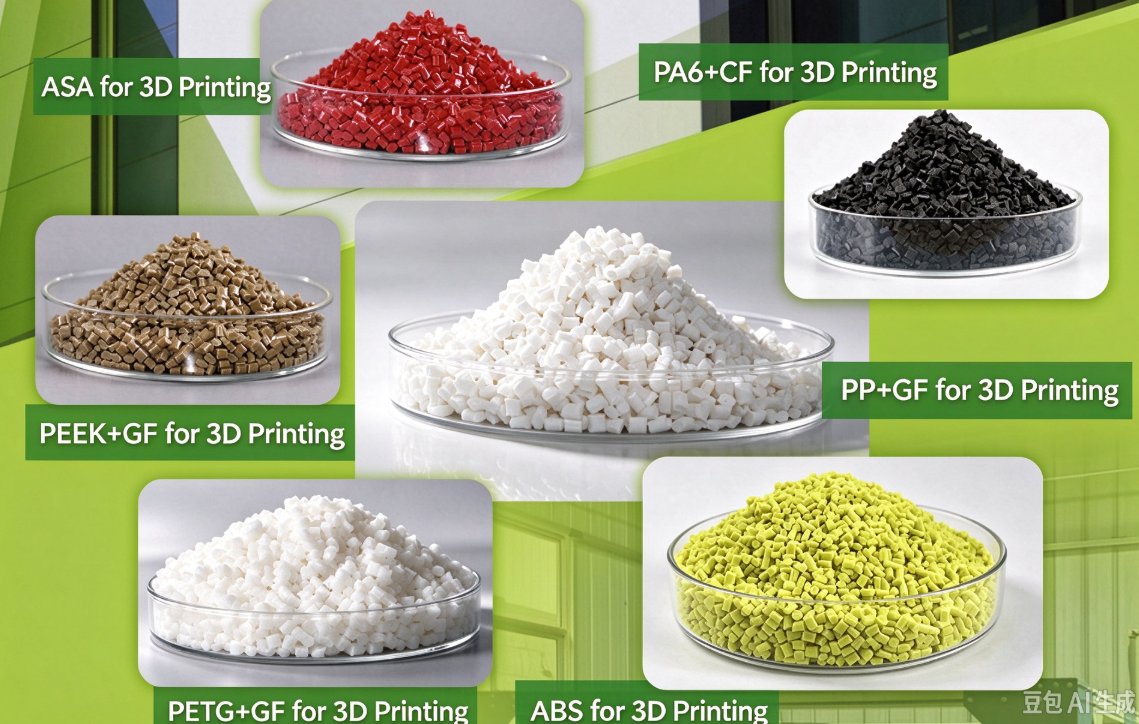
Technical Advantages of 3D Printing Glass Fiber PP Compounds
Engineered glass fiber reinforced PP resin combines low density and chemical resistance with high-modulus glass fiber orientation, delivering exceptional stability for direct pellet extrusion:
Low Thermal Shrinkage & Warpage Elimination: Micro-crystallization control suppresses volumetric cooling contraction, maintaining flat build surfaces and tight dimensional accuracy on multi-meter prints.
Elevated Thermal Deflection Resistance ($155^\circ\text{C}$ HDT): Delivers a Heat Deflection Temperature (HDT) of $155^\circ\text{C}$, resisting thermal deformation during high-temperature post-curing or sand mold ramming.
Superior Mechanical Integrity (63 MPa Tensile Strength): Reaches a tensile strength of 63 MPa, a flexural modulus of 4000 MPa, and a Charpy notch impact strength of $27\text{ kJ/m}^2$ to withstand heavy mechanical shock and sand compaction.
Secondary Machinability & Surface Finish: Produces dense, non-porous print beads that allow direct CNC milling, tapping, and surface polishing to match strict foundry surface specifications.
Direct Pellet Extrusion Efficiency: Optimized melt flow index ($2.2\text{ g/10min}$ at $1.17\text{ g/cm}^3$ density) fills large-nozzle screw extruders smoothly, cutting print times and raw material costs compared to traditional wood tooling.
Broad Industrial Applications Across Tooling and Manufacturing
Beyond gray iron and ductile iron foundry casting molds, our modified 3D printing glass fiber PP compound is widely deployed across demanding industrial sectors:
Foundry & Metallurgy: Tooling patterns for gray cast iron, ductile iron, non-ferrous metal castings, and concrete forms.
Medical & Orthotics: Custom lightweight 3D printed prosthetic sockets, orthotic supports, and patient-specific transfer frames.
Landscape & Architecture: Large outdoor architectural components, decorative facade forms, and structural landscape sculptures.
Industrial Equipment: Jig and fixture prototypes, large equipment covers, and custom manufacturing assembly aids.
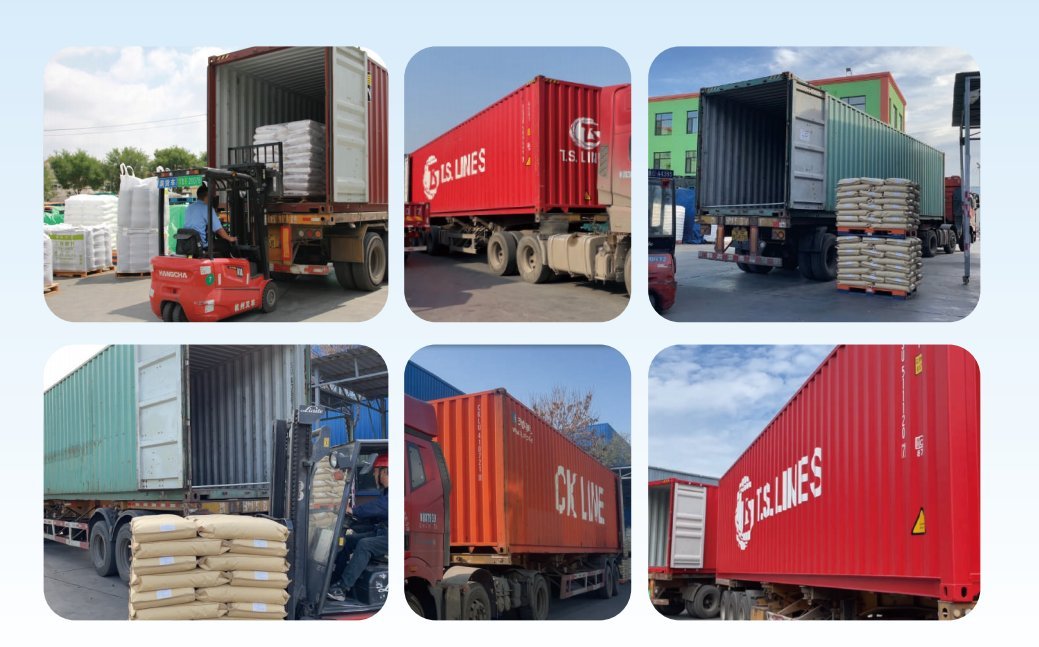
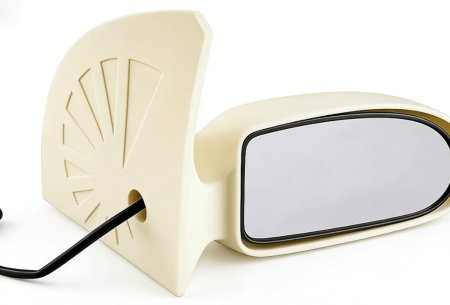
Alongside specialized glass fiber reinforced PP compounds, we manufacture prime general-purpose engineering polymers including Chimei ABS PA-757Q for high-gloss, low-odor equipment covers and industrial enclosures.
Partner with Qingdao Zhongxin Huamei Plastic Co., Ltd.
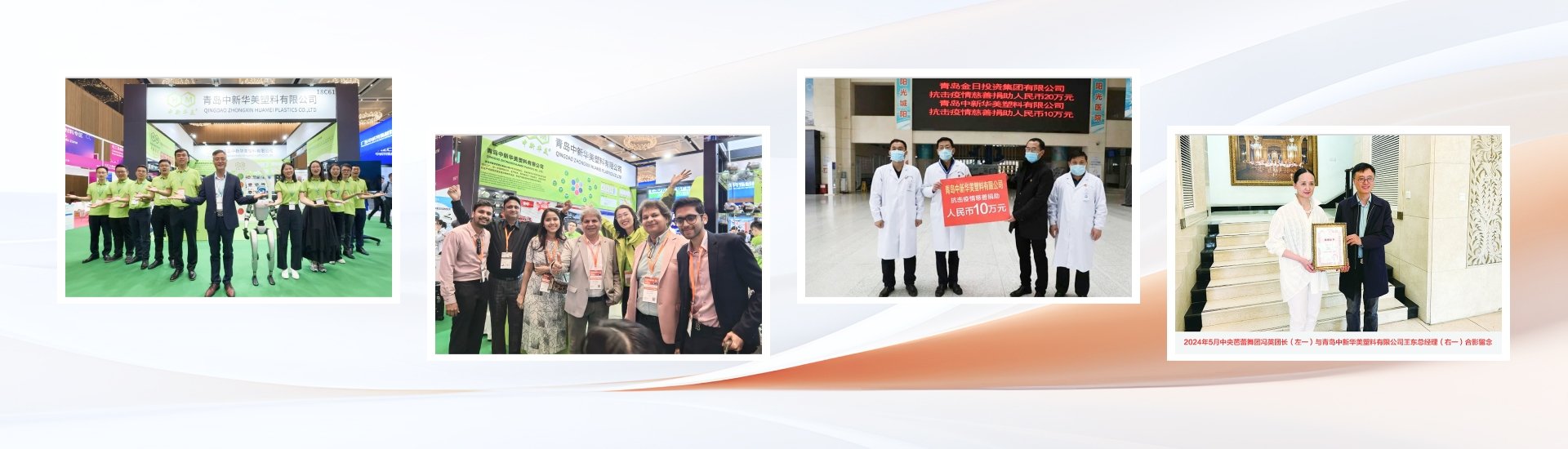
Selecting a certified polymer source factory requires verifying raw material compounding precision, automated color consistency, and batch-to-batch physical property stability. Established in May 1997 as an official joint venture enterprise backed by CHIMEI Corporation, Qingdao Zhongxin Huamei Plastic Co., Ltd. is a certified National High-Tech Enterprise with 30 years of custom compounding expertise.

Operating across a 45,000 m² modern manufacturing facility equipped with 30 automated Coperion twin-screw granulating lines, extensive R&D testing labs, and an annual capacity exceeding 100,000 tons, our factory utilizes an automated digital MES process management system to enforce a rigorous 30-step quality assurance protocol.
We warmly invite 3D printer OEMs, foundry pattern makers, and procurement engineers to contact our technical engineering team under FOB or EXW terms to request datasheets, obtain evaluation pellet samples, and place trial batch orders.
Prev: None