
Warpage is the number-one headache in cross flow fan blade production. A blade that looks perfect leaving the mold can bow after cooling, rub against the housing, generate noise and vibration, and ultimately fail in the field. For injection molders in Pakistan supplying air conditioners, where blades run long, thin and fast in hot ambient conditions, warpage directly drives scrap rates and customer complaints. The good news: most warpage traces back to one controllable variable — the resin. This guide explains why blades warp and how a30% glass fiber reinforced AS (AS GF30)compound solves it at the material level.
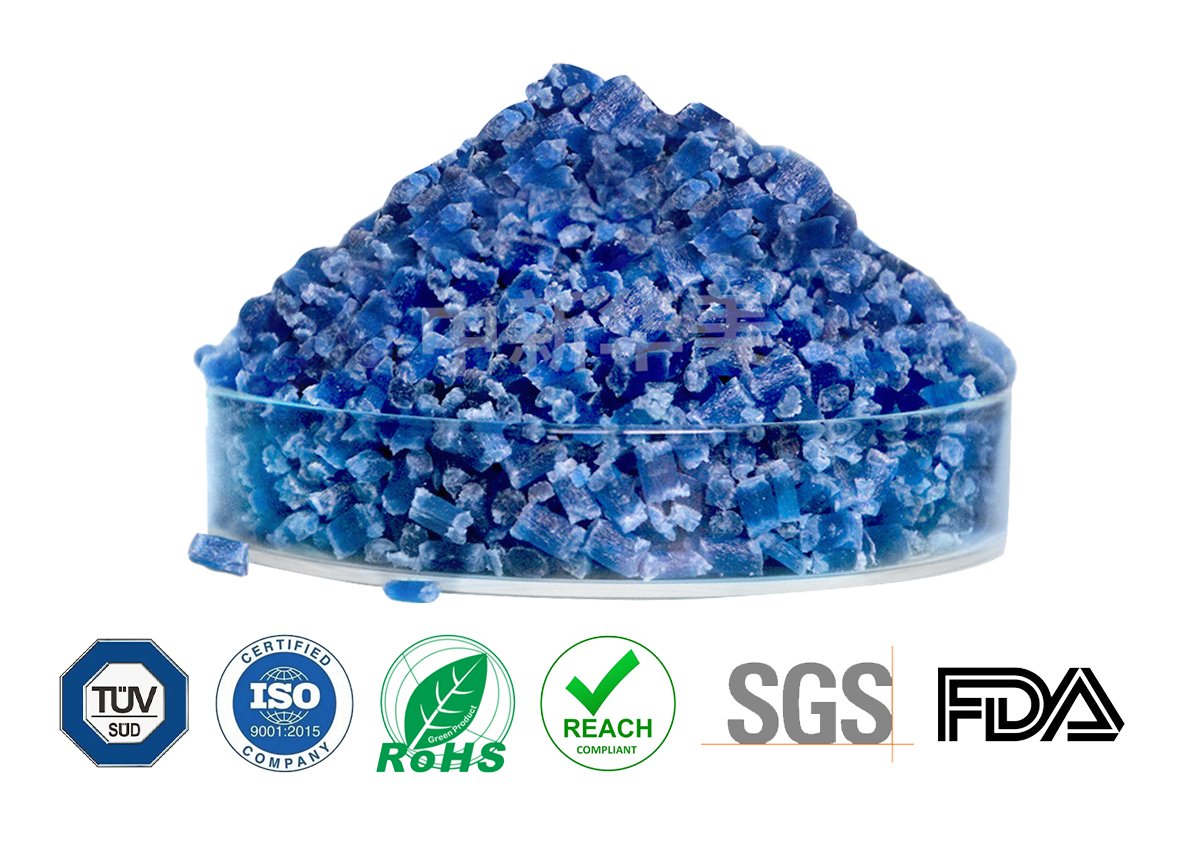
Why Fan Blades Warp
Three mechanisms cause most dimensional problems. First,uneven shrinkage: as molten plastic cools, it contracts; if contraction differs between thick and thin sections, internal stress bends the part. Unfilled AS and general-purpose ABS shrink more and less uniformly, making long blades especially prone to bowing. Second,thermal deformation: an air-conditioner fan sits near the condenser and can face sustained temperatures that soften low-HDT materials, allowing a blade to creep out of shape over time. Third, fiber orientation effects: in poorly designed reinforced compounds, uneven fiber distribution creates directional shrink and twist — a reminder that not all glass-fiber grades behave alike.
Why AS GF30 Holds Its Shape
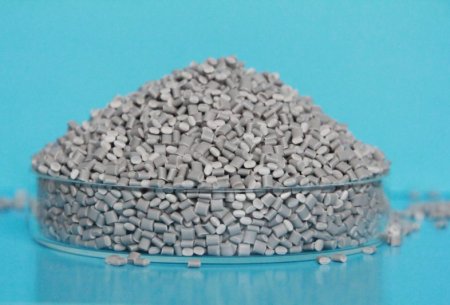
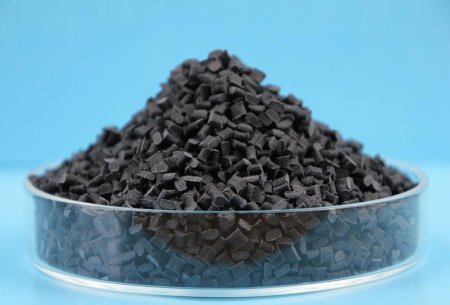
AS GF30 is a SAN (styrene-acrylonitrile) matrix reinforced with 30% chopped glass fiber, a level customizable from 20% to 50%. The fibers create a rigid internal network that sharply reduces and equalizes shrinkage while lifting stiffness and heat resistance. The result is adimensionally stablecompound built for precision blades:
- Low, uniform shrinkage (0.2–0.6%)
— less differential contraction between rib, hub and blade tip, so parts stay flat and within tolerance.
- High rigidity
— tensile strength 130 MPa and flexural modulus 9,500 MPa keep slender blades from deflecting under centrifugal load.
- High heat resistance
— a heat deflection temperature of 103°C at 1.8 MPa prevents softening and creep in hot airflow.
- Balanced melt flow (10 g/10min at 220°C, 10 kg)
— fills thin, complex cavities without excessive packing stress.
Together, these properties cut the two biggest warpage drivers — uneven shrink and heat softening — while remaining fully injection-moldable on standard equipment.
Material Comparison
| Property | Unfilled AS | Typical ABS | AS GF30 |
|---|---|---|---|
| Tensile strength | ~70 MPa | ~45 MPa | 130 MPa |
| Shrinkage | higher, uneven | moderate | 0.2–0.6%, uniform |
| Heat deflection temp | low | ~85–100°C | 103°C |
| Dimensional stability | poor | fair | excellent |
Practical Tips for Molders
Even with the right resin, process matters. Keep mold temperature uniform across cavities, avoid over-packing the hub, and allow adequate, even cooling before demold. Because AS GF30 shrinks little and consistently, you will typically need fewer tool adjustments and see higher first-pass yield. Our technical team can review your gate layout and parameters at no cost.
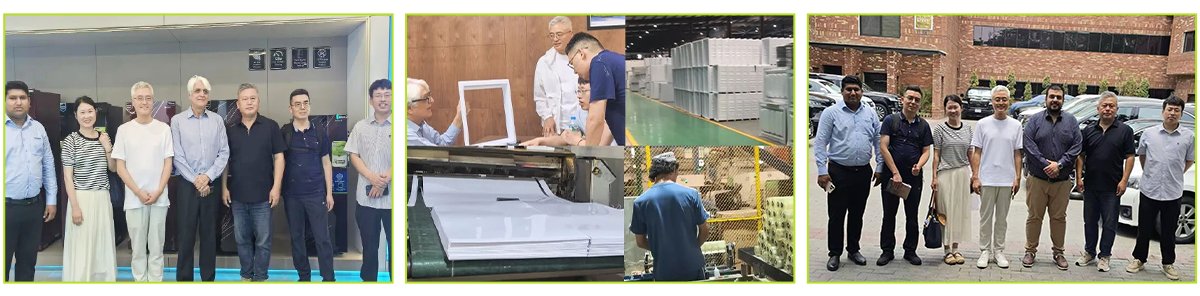
Backed by a CHIMEI Joint-Venture Factory
Qingdao Zhongxin Huamei is aCHIMEI joint-venture enterprisewith 30+ years in modified plastics, 50,000+ mature formulations, IATF16949/ISO/UL/SGS/FDA certification and RoHS/REACH compliance. Our AS GF30 already runs in Gree's and Haier's overseas plants in Pakistan, and our chairman and product manager visited local fan-blade molders on site in June–July 2026 to solve real processing problems face to face.

Need a stable, low-warpage blade resin?
Request free AS GF30 samples and the full technical data sheet to test in your own mold.
Contact us now — WhatsApp / WeChat: +8618765279757 (free samples and technical consultation available)