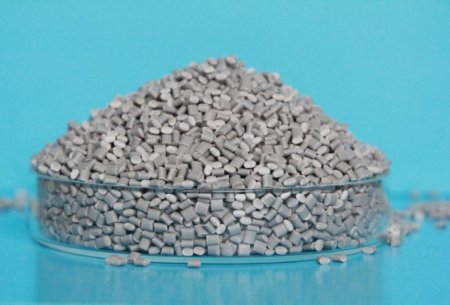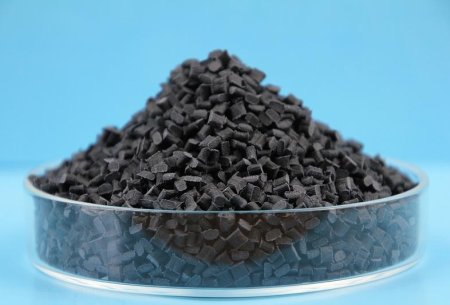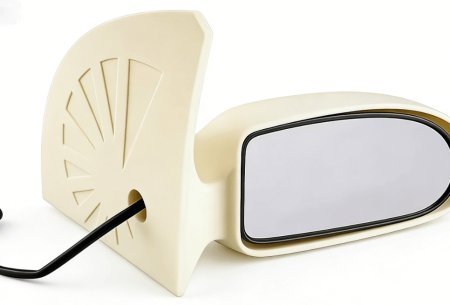

Adding glass fiber (GF) to nylon PA resin for reinforcement modification significantly improves its strength, hardness, fatigue resistance, dimensional stability, and creep resistance. However, the dispersibility and bonding strength of glass fiber in the nylon PA matrix have a great impact on product performance. In actual production, injection-molded products of glass fiber reinforced nylon PA often have various defects due to improper raw material treatment, unreasonable product or mold design, incorrect process operation, or mechanical issues.
This article analyzes the injection molding process of glass fiber reinforced nylon PA, as well as the causes and solutions of common defects, providing professional guidance for manufacturers. As a professional modified plastic manufacturer, Qingdao Zhongxinhuamei also offers targeted solutions to help enterprises reduce defects and improve production efficiency.
Key Factors Affecting Glass Fiber Reinforced Nylon PA Molding Quality
Glass fiber reinforced nylon PA is widely used in automotive parts, electronic components, mechanical parts, and other fields due to its excellent comprehensive performance. However, its molding process is more complex than ordinary nylon PA, mainly because glass fiber and nylon PA have very different flow properties. The dispersibility of glass fiber in the nylon matrix and the bonding force between the two directly determine whether the final product has defects. Poor dispersibility or weak bonding will easily lead to surface defects, reduced mechanical properties, and other problems. Therefore, mastering the correct injection molding process and defect solutions is crucial for producing high-quality glass fiber reinforced nylon PA products.
Common Injection Molding Defects of Glass Fiber Reinforced Nylon PA & Their Solutions
The most common defects in the production of glass fiber reinforced nylon PA are poor surface appearance, mainly including glass fiber exposure, burning, material flowers, dents, silver streaks, waves, and flash. Below is a detailed analysis of each defect, including its causes and practical solutions.
1. Glass Fiber Exposure
Glass fiber has much worse fluidity than nylon PA. During the flow of materials in the mold, the material flows forward from the middle of the interlayer and turns outward on both sides. Therefore, the material with good fluidity (nylon PA) will run ahead, while the material with poor fluidity (glass fiber) will stay on the mold surface, resulting in glass fiber exposure. This defect not only affects the appearance of the product but also reduces its surface smoothness and corrosion resistance.
Solutions:
Increase injection speed: After increasing the speed, although the flow speeds of glass fiber and PA are different, the proportion of this relative speed difference is very small relative to high-speed injection, reducing the possibility of glass fiber staying on the surface.
Increase mold temperature: Raising the mold temperature reduces the contact resistance between glass fiber and the mold, minimizes the speed difference between glass fiber and PA, makes the middle layer of the material flow as thick as possible, and the shell layers on both sides as thin as possible.
Reduce the temperature of the measuring chamber and reduce the amount of melt: This minimizes the possibility of separation between PA and glass fiber, ensuring better mixing of the two materials.
2. Burning
During the filling process, in addition to the original air in the mold cavity, there are also volatile gases formed during the molding process. When injected at high speed, the gas is compressed to generate high temperatures, which easily causes local carbonization or burning of the product. Burning not only affects the appearance but also damages the mechanical properties of the product.
Causes:
Poor mold ventilation
Too high molding temperature
Too high injection speed
Too high injection pressure
Too high moisture content in raw materials
Solutions: Take corresponding improvement measures according to the specific causes, such as increasing mold ventilation, reducing molding temperature and injection speed, lowering injection pressure, and fully drying raw materials.
3. Material Flowers
Material flowers are caused by agglomeration of glass fiber. If high-quality GF reinforced PA products are to be obtained, it is recommended to use a twin-screw extruder for granulation. For the selection of GF, PA-specific reinforced GF can be used. At the same time, coupling agents or compatibilizers can be added, and the addition amount of graft-type compatibilizers is about 3%. In addition, about 0.6% of silicone-based additives can be added to greatly improve the surface effect of the product.
4. Dents
Dents are common defects in injection-molded products, which are mainly caused by insufficient filling or uneven material distribution. They affect the appearance and structural stability of the product.
Causes & Solutions:
Insufficient filling or insufficient feeding: Increase feeding or open the feed gate.
Improper gate position or asymmetric gate: Adjust according to specific conditions to ensure uniform material flow.
Insufficient or too small runners and gates: Increase the number of runners and expand the gate size to improve material flow.
Uneven product wall thickness: Modify the mold or increase injection pressure to ensure uniform filling.
5. Glass Fiber Silver Streaks
Silver streak defects such as metal bright spots appear on the surface of products added with glass fiber, especially near the material flow area of the convex part and the joint line where the fluid meets again. This defect is mainly caused by improper process parameters, which affect the surface finish of the product.
Causes & Solutions:
Too low injection speed: Increase the injection speed and consider using multi-stage injection (slow first, then fast) to ensure uniform material flow.
Too low mold temperature: Increase the mold temperature to improve material fluidity and reduce the generation of silver streaks.
Too low melt temperature: Increase the barrel temperature and increase the screw back pressure to ensure full melting of the material.
Large changes in melt temperature: Increase the screw back pressure, reduce the screw speed, and use a longer barrel to shorten the stroke, ensuring stable melt temperature.
6. Waves
Waves are irregular wavy lines on the surface of the product, which are mainly caused by unstable material flow and uneven filling. They seriously affect the appearance of the product.
Causes & Solutions:
Small gate leading to material injection in the mold cavity: Modify the gate size or reduce the injection pressure to avoid injection phenomenon.
Tortuous, narrow, and rough runners with insufficient material supply: Modify the runners, reduce their roughness, and ensure sufficient material supply.
Uneven product cross-section, large area, and complex shape: Adjust the product design to make the cross-section uniform, or remove the protruding discs and lines on the product.
Improper mold cooling system or low mold temperature: Adjust the cooling system or increase the mold temperature to ensure uniform cooling.
Low melt temperature, mold or nozzle temperature: Increase the melt barrel temperature and nozzle temperature to improve material fluidity.
Too small injection pressure and speed settings: Increase the corresponding parameter settings to ensure stable filling.
7. Flash
Thin flash appears along the parting line or mold sealing surface. In most cases, flash is caused by insufficient clamping force of the machine during injection and holding pressure, which cannot lock and seal the mold along the parting line. If there is a place with high pressure in the mold cavity, mold deformation here may cause flash. Under high molding temperature and injection speed, the melt can still flow fully at the end of the runner, and flash will be generated if the mold is not locked tightly.
Solutions:
Increase clamping force to ensure the mold is tightly locked.
Reduce injection speed and adopt multi-stage injection (fast first, then slow) to reduce mold pressure.
Switch to holding pressure earlier to avoid excessive pressure in the mold cavity.
Reduce barrel temperature to reduce melt fluidity.
Reduce mold wall temperature to reduce material adhesion.
Reduce holding pressure to avoid mold deformation caused by excessive pressure.
Professional Solutions for Glass Fiber Reinforced Nylon PA from Qingdao Zhongxinhuamei
The occurrence of injection molding defects in glass fiber reinforced nylon PA is not only related to the injection molding process but also closely related to the quality of the raw materials. Qingdao Zhongxinhuamei Plastic Co., Ltd., with years of experience in modified plastic R&D and production, specializes in the research and production of glass fiber reinforced nylon PA materials. We use high-quality nylon PA resin and PA-specific reinforced glass fiber, add professional coupling agents and compatibilizers, and adopt advanced twin-screw extruder granulation technology to ensure uniform dispersion of glass fiber in the nylon matrix and strong bonding force.
Our glass fiber reinforced nylon PA materials have stable performance, good processability, and can effectively reduce the occurrence of defects such as glass fiber exposure, material flowers, and silver streaks during injection molding. In addition, we provide professional technical guidance for customers, including mold design suggestions, injection molding process parameter adjustment, and defect solution support, helping customers improve production efficiency and product qualification rate.
In summary, glass fiber reinforced nylon PA has excellent mechanical properties, but its injection molding process is relatively complex, and various defects are prone to occur without proper operation. By mastering the causes and solutions of common defects, and choosing high-quality raw materials and professional technical support, manufacturers can effectively reduce defects and produce high-quality products.
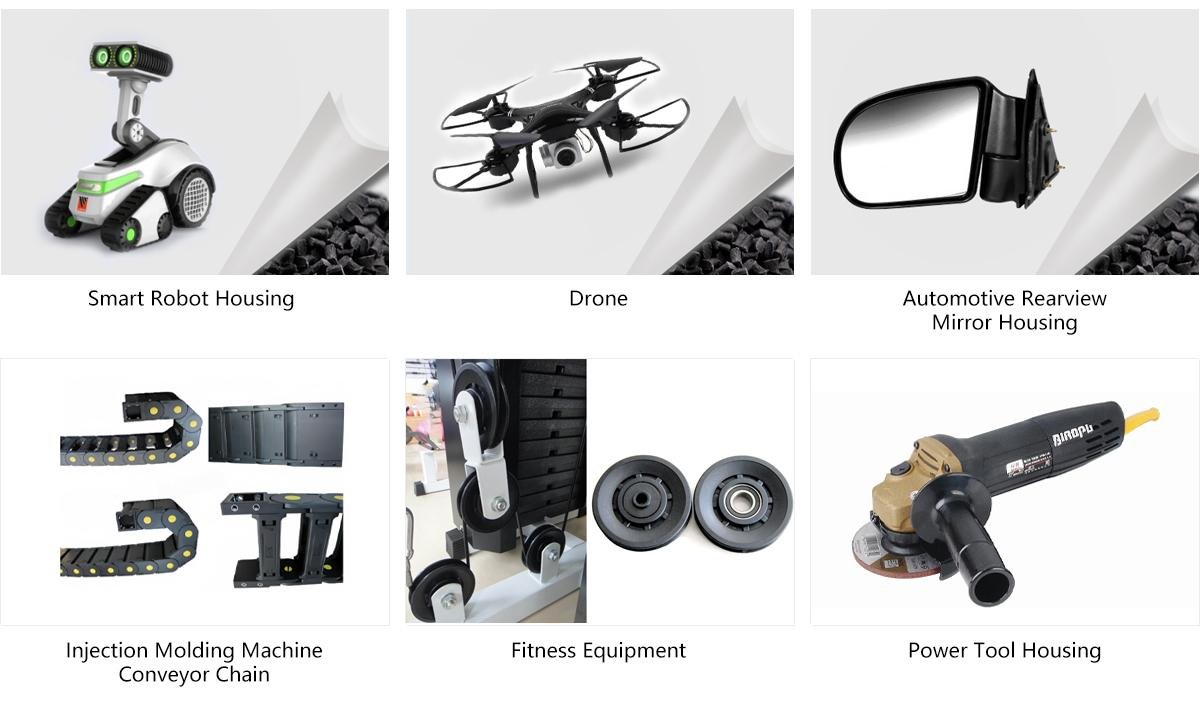
Qingdao Zhongxinhuamei is committed to providing high-performance glass fiber reinforced nylon PA materials and GF reinforced PA molding solutions, helping enterprises solve molding problems and achieve high-quality development.