
How to Solve the PPS Supply Chain Crisis Caused by Hormuz Strait Blockade?
Recently, the continuous tension in the Middle East, especially the blockade crisis of the Hormuz Strait, has become a “black swan” event shaking the global supply chain. As a crucial strategic waterway, the Hormuz Strait transports about 20%-30% of the world’s oil and 20% of liquefied natural gas (LNG).
For the manufacturing industry relying on high-performance special engineering plastics such as automotive, electrical and electronic, and home appliances, this crisis has quickly spread to domestic workshops and procurement reports—polyphenylene sulfide (PPS), a star material in new energy vehicles and 5G communications, is facing an unprecedented supply chain test. Finding a reliable Plan B has become a top priority for terminal enterprises.
Will PPS Prices Soar? It’s Not an Exaggeration
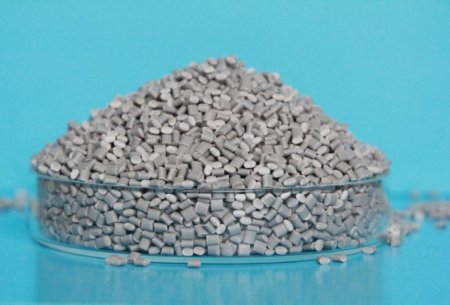
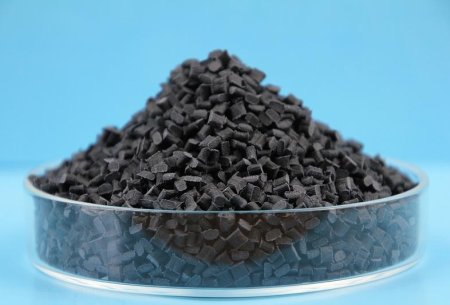
Known as “plastic gold”, PPS is highly praised for its excellent high-temperature resistance, chemical corrosion resistance, dimensional stability, and inherent flame retardancy. However, for a long time, the global high-end production capacity and core discourse power of PPS have been concentrated in Japanese enterprises such as Toray, DIC, and Kureha. The Hormuz Strait blockade hits the weaknesses of domestic PPS terminal customers from two fatal dimensions:
1. The “Butterfly Effect” of International Crude Oil Price Fluctuations
The Hormuz Strait is the world’s most important oil transportation artery. Blocked waterways or increased risk expectations directly lead to sharp fluctuations in international crude oil and bulk chemical raw material prices. PPS synthesis relies heavily on basic chemical raw materials—p-dichlorobenzene (PDCB), a key raw material for PPS, is derived from benzene, a by-product of oil refining and ethylene cracking. The surge in upstream costs is quickly passed down to the downstream, driving up the factory prices of PPS basic resin and modified products.
2. Logistics and Delivery Disruption Under “Japan Dependence”
Japan is the core supplier of high-quality PPS resin and its composites globally, but its supply chain is extremely fragile:
- High energy and raw material dependence: About 95.1% of Japan’s imported crude oil comes from the Middle East, and 73.7% of it must pass through the Hormuz Strait. Once the strait is blocked, Japanese refineries will reduce production due to raw material shortages, directly halting PPS monomer and resin production capacity.
- Cost impact: Japan’s electricity prices are highly sensitive to fossil energy. The polymerization and drying links in PPS production are energy-intensive, and the surge in energy prices will make Japanese PPS lose global competitiveness.
- Export-oriented risks: Japanese PPS supplies the global automotive and electronic industrial chains on a large scale. Logistics disruptions will damage Japanese enterprises’ status as “reliable suppliers” in the global supply chain.
Most high-end domestic manufacturing enterprises, especially auto parts and precision electronic manufacturers, rely on Japanese PPS suppliers. For enterprises adopting “Just-In-Time (JIT)” and “zero inventory” management, this crisis means they dare not accept orders, production lines are short of materials, and cost accounting is completely out of control.
Why Can Local PPS Replace Japanese Imports?
Crises often catalyze breakthroughs. While terminal customers are struggling to find a Plan B, many ignore the fact that China’s local PPS modified industrial chain has initially had the capability to fully replace imported materials. Benefiting from upstream enterprises such as NHU (with 22,000 tons of annual PPS capacity and 100% capacity utilization in 2024) mastering the entire PPS basic resin synthesis process, domestic modified enterprises finally have sufficient high-quality raw materials. In addition, China’s PPS industry has great resilience:
1. Diversified Energy Supply
Although China also imports crude oil through the Hormuz Strait, it has land pipelines from Russia and Central Asia, as well as an expanding coal-to-chemicals path. Some PPS precursors can be produced through the coal-to-benzene route, providing a survival bottom line when oil supply is cut off. China’s modern coal chemical industry has made remarkable achievements, with coal-based products equivalent to more than 40 million tons of crude oil, effectively ensuring the diversification of chemical raw materials.
2. Full Industrial Chain Advantage
China has a complete local industrial chain from p-dichlorobenzene and sodium sulfide to PPS resin and modification. Even if imports are restricted, domestic existing production capacity and strategic reserves can support the operation of key fields such as new energy vehicles for a period of time.
Key Local PPS Suppliers: Your Reliable Plan B
Shifting the focus to high-quality domestic suppliers has become the core strategy for manufacturing enterprises to improve supply chain resilience. Here are the mainstream domestic enterprises with mature alternative solutions in the PPS modification field (in no particular order):
1. Kingfa Sci. & Tech.: Stabilizing the General Market with Large-Scale Production Capacity
In fields with large PPS demand such as auto electronics and home appliance structural parts, Kingfa relies on its large production capacity and scale advantages of full-series reinforced and flame-retardant PPS. It has successfully provided key “large-scale supply guarantee” for many domestic leading automakers and home appliance giants during multiple import material delivery delays or shortages, with stable batch quality becoming a cornerstone of general special materials.
2. Wote Material: Breaking Through in the “No-Man’s Land” of 5G High-Frequency Communications
In the past, low-dielectric PPS for high-frequency and high-speed scenarios was almost dominated by imported materials. In recent years, Wote Material has accurately entered this segmented track. Its self-developed low-dielectric/high-frequency PPS materials have successfully entered the supply chain of 5G communication base stations and high-frequency antenna oscillators, which have extremely strict requirements on electrical performance and signal transmission, effectively breaking the technical blockade of foreign enterprises in this high-end segmented market.
3. Kumho Sunny: Conquering High-Difficulty Replacement with “Scenario-Based Customization”
Different from the traditional “selling what you have” resin classification model, Kumho Sunny adopts a “scenario-based characteristic customization” route close to pain points. For example, in the extremely demanding new energy vehicle thermal management system (such as water valves/water pumps), Kumho Sunny’s high-strength hydrolysis-resistant PPS solution directly benchmarks and successfully replaces the Japanese brand that has long monopolized this field. In the precision electronics field, its ultra-high flow and low warpage customization solution solves the molding problem of thin-walled connectors, helping terminal customers achieve seamless and low-risk domestic switching.
Selection Guide: How to Choose the Right Local PPS Supplier?
Material selection is not a simple brand comparison. Terminal customers should select models according to the pain points of specific application scenarios:
- For bulk general and basic structural parts (such as traditional home appliance skeletons, conventional industrial pump valve connectors): Prioritize “large-scale supply guarantee giants” such as Kingfa Sci. & Tech., focusing on their basic resin and modified production capacity, historical delivery stability, and cross-regional logistics allocation capacity.
- For special cutting-edge and single-performance extreme applications (such as 5G base station antenna oscillators, special radio frequency connectors): Target “segmented track specialists” such as Wote Material, focusing on the measured data of specific performance, enterprise patent layout, and real endorsement from leading industry customers.
- For complex environments and high-precision custom parts (such as new energy vehicle thermal management water pumps/water valves, ultra-thin wall electronic connectors): Choose “scenario customization and JDA (Joint Development Agreement) pioneers” such as Kumho Sunny, focusing on their in-depth modified formula strength, mold flow analysis, mold trial support, and agile response capabilities.
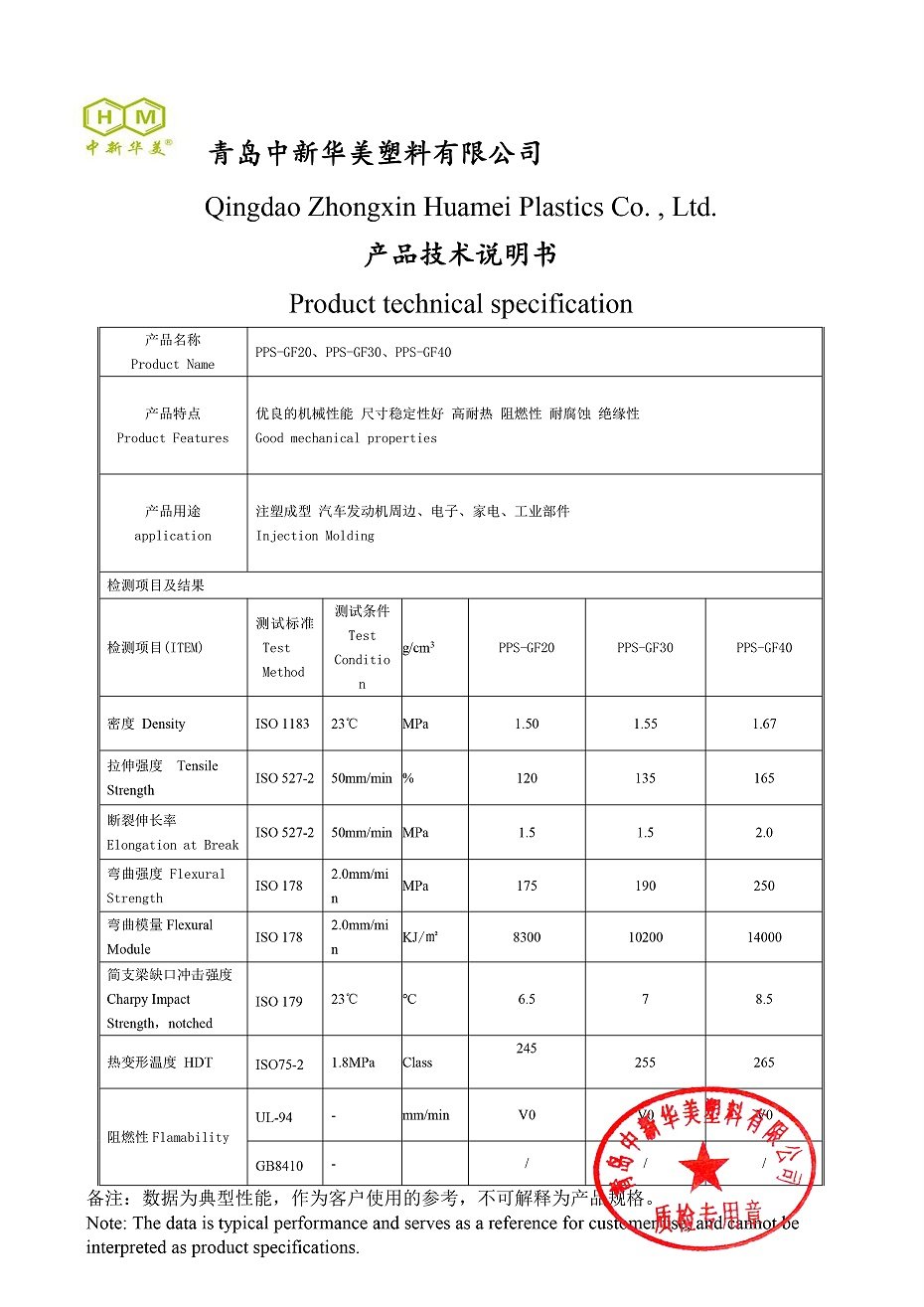 Solution: Qingdao Zhongxinhuamei’s PPS Supply Chain Guarantee
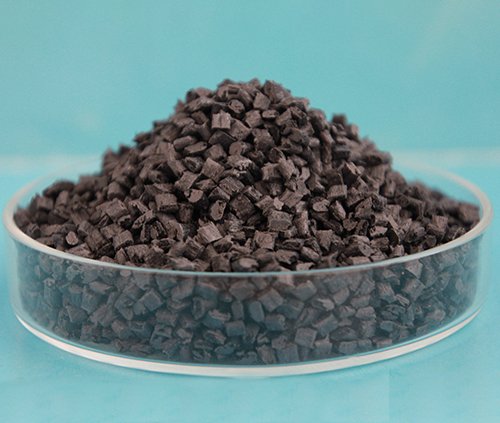
Facing the PPS supply chain crisis caused by the Hormuz Strait blockade, Qingdao Zhongxinhuamei Plastic Co., Ltd., as a national high-tech enterprise integrating R&D, production, and technical services, has established a stable cooperative relationship with upstream PPS resin suppliers such as NHU. We provide customized PPS modified materials for new energy vehicles, 5G communications, and other fields, with stable performance, consistent batches, and reliable supply capacity, helping terminal enterprises solve supply chain worries.
In summary, the Hormuz Strait blockade has exposed the fragility of relying on a single import channel for the PPS supply chain. China’s local PPS industrial chain has matured, and choosing the right local supplier is the key to breaking through the crisis. Qingdao Zhongxinhuamei is committed to providing reliable PPS material solutions, helping enterprises build a resilient supply chain and smoothly pass the supply chain test.