

3D Printing Engineering Plastics: Core Materials for FDM & Industrial Applications (ABS, PC, PA, PEEK)
3D printing technology has brought profound transformations to modern design and production. Governments, research institutions, and enterprises worldwide have vigorously promoted the development of 3D printing and its applications across various industries, completely reshaping national manufacturing systems and injecting new vitality into industrial growth.

According to reports from 3D printing consulting firms, the global manufacturing industry has achieved a growth rate of over 21% driven by 3D printing technology in recent years, with an annual output value reaching 21 billion US dollars. As a comprehensive technology, 3D printing comprises three core components: advanced molding processes, high-performance 3D printing materials, high-precision three-dimensional design, and powerful molding equipment.
Among these, 3D printing materials are indispensable to the technology’s development—currently, there are more than 200 types of 3D printing materials on the market, all of which require extremely high standards in heat resistance, flexibility, stability, and environmental sensitivity.
Engineering plastics, the most widely used category of 3D printing materials, account for over 90% of commercial 3D printing materials and are primarily applied in FDM (Fused Deposition Modeling) equipment, mainly including thermoplastic and thermosetting materials.
Qingdao Zhongxinhuamei Plastic Co., Ltd., a professional modified plastic manufacturer, has developed tailored high-performance engineering plastic solutions for 3D printing, meeting the diverse needs of aerospace, automotive, medical, and industrial manufacturing sectors.
Core 3D Printing Engineering Plastics & Their Applications
ABS Engineering Plastic
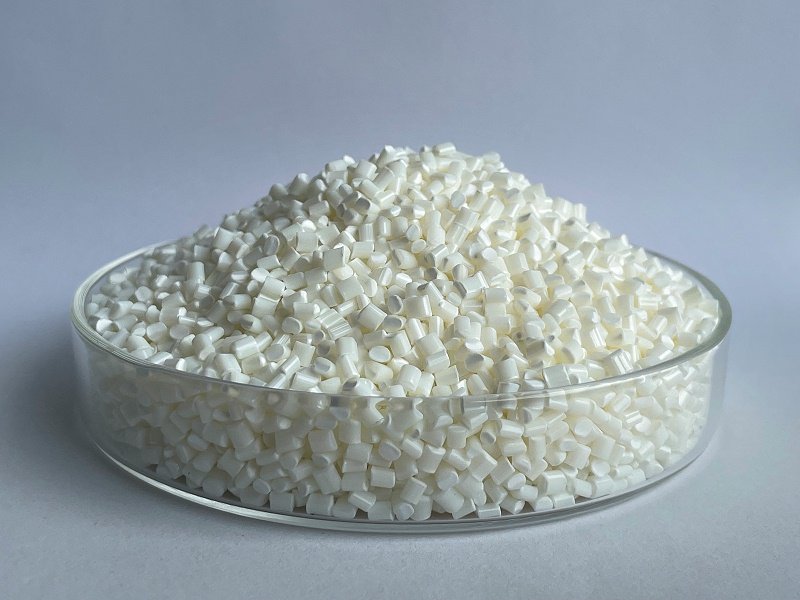
ABS is a highly popular thermoplastic 3D printing material, typically supplied in filament form. It exhibits excellent hot-melt properties and high impact strength, making it the preferred thermoplastic for FDM-based 3D printing. Printed parts feature superior mechanical strength and structural stability, and it can be used in conjunction with soluble support 3D printing materials, while supporting multi-color customization to meet diverse design requirements.
ABS Engineering Plastic
H3: PC Engineering Plastic
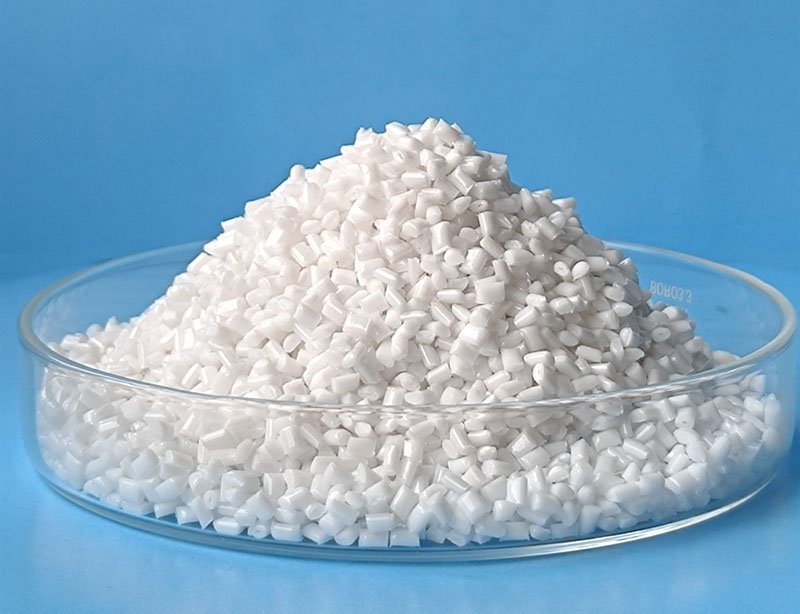
White PC engineering plastic, when combined with FDM 3D printing technology, can fabricate durable models, professional tools, and final product components. Compared to other 3D printing materials, PC offers outstanding strength, heat resistance, and impact resistance, making it suitable for final parts in high-performance engineering applications. It is widely adopted in automotive manufacturing, aerospace, medical devices, and other high-end industrial fields.
H3: PA Engineering Plastic
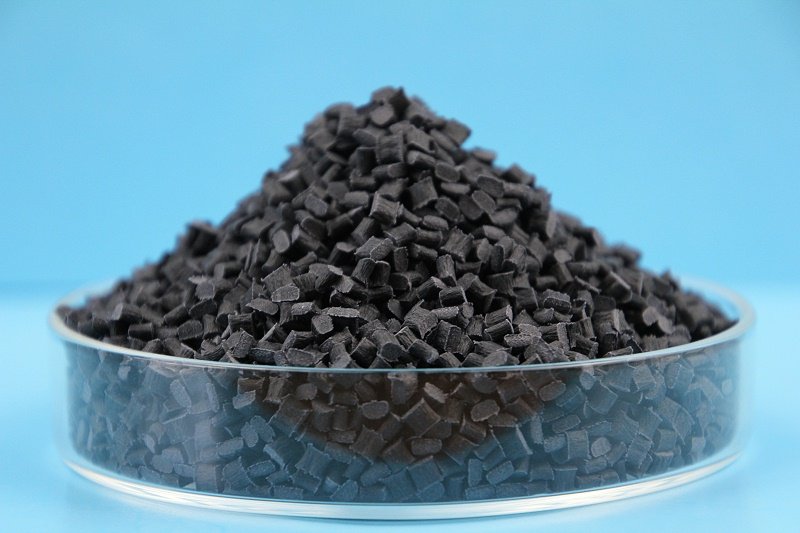
PA engineering plastic boasts high mechanical strength, moderate flexibility, heat resistance, and wear resistance. PA materials developed by Stratasys exhibit exceptional strength, fatigue resistance, and corrosion resistance to chemicals, making them ideal for repeated engagement, snap-fit, and vibration-resistant components. With superior strength and toughness compared to other thermoplastics, PA materials are widely applied in automotive, aerospace, and industrial manufacturing.
PA Engineering Plastic
H3: PEEK Engineering Plastic
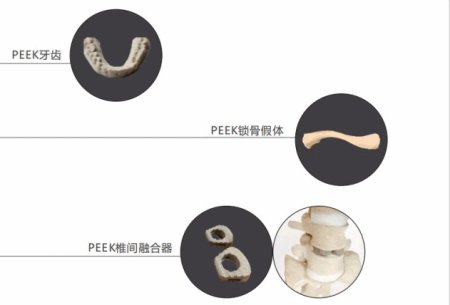
PEEK (Polyether Ether Ketone) is a special engineering plastic with outstanding properties including high temperature resistance, self-lubrication, easy processing, and high mechanical strength, enabling the production of precision mechanical parts. Common applications include automotive gears, oil screens, and aircraft components. Notably, PEEK offers excellent wear resistance, biocompatibility, and an elastic modulus close to human bone, making it a core material for medical applications such as bone replacement, implantation, and bionic artificial bone fabrication.
H2: Qingdao Zhongxinhuamei’s Tailored 3D Printing Plastic Solutions
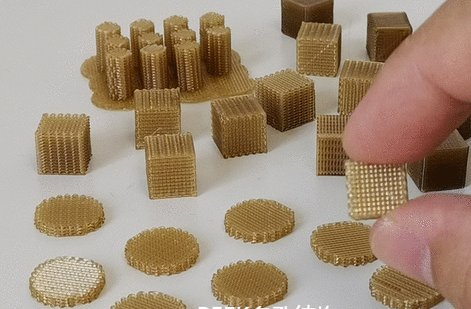
To address the stringent performance requirements of different 3D printing processes and application scenarios, Qingdao Zhongxinhuamei has developed a comprehensive range of modified 3D printing plastics, including enhanced ABS, high-strength PC, toughened PA, and biocompatible PEEK materials. Our products are optimized for FDM and other mainstream 3D printing technologies, with improved fluidity, mechanical strength, and processing stability. By integrating professional material modification technology, we help manufacturers overcome material bottlenecks in 3D printing, expand application scenarios, and enhance the competitiveness of their products in the global market.
-
 February 9, 2026