
3D Printing & Modified Plastics: Solving Material Challenges & Expanding Industrial Applications
While injection molding, blow molding and other traditional processes remain core channels for consuming modified plastics, 3D printing—a forming technology that has drawn global attention since its inception—is also gaining increasing focus from modified plastic manufacturers.
Especially in the lightweight track where polymer materials excel, the strong collaboration between 3D printing and modified plastics creates a 1+1>2 synergy of "structure + material", driving innovation across aerospace, medical, automotive and manufacturing industries.
As a professional modified plastic supplier, Qingdao Zhongxinhuamei Plastic Co., Ltd. has been dedicated to developing high-performance modified materials tailored for 3D printing, helping manufacturers bridge the material gap and achieve in the additive manufacturing field.
3D Printing’s Rising Demand for High-Performance Modified Plastics
Plastic materials are the foundation of 3D printing technology, and their properties directly determine the quality and functionality of printed products. Currently, over 100 plastic materials are available for 3D printing, but their variety is still relatively limited compared to other manufacturing sectors. A key pain point lies in traditional plastics’ poor melting performance: they tend to clog 3D printing nozzles, have low fluidity and low processing efficiency, failing to meet 3D printing’s strict requirements. Different 3D printing technologies impose distinct performance standards on plastics—including fluidity, formability and mechanical properties—necessitating targeted modification of traditional materials.
In the 3D printing field, widely used engineering plastics mainly include Polyamide (PA), Polyether Ether Ketone (PEEK), Acrylonitrile Butadiene Styrene (ABS) and their modified variants. These materials offer excellent mechanical strength, heat resistance and corrosion resistance, and are extensively applied in medical devices, mechanical manufacturing, aerospace and other high-end fields. Qingdao Zhongxinhuamei’s R&D team has focused on optimizing these materials for 3D printing, addressing processing bottlenecks and enhancing product performance to match diverse application scenarios.
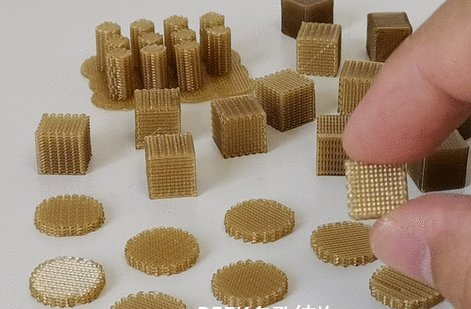
Key 3D Printing Materials & Their Targeted Modification Solutions
Polyamide (PA/Nylon)
PA, commonly known as nylon, is a commercially successful 3D printing material with high tensile strength and good flexibility. Its glass transition temperature reaches 110℃, and printed parts exhibit favorable mechanical strength, elasticity and toughness—even enabling 3D-printed clothing. However, PA printed parts have relatively rougher surfaces compared to ABS and PC.
A major advantage of PA resin is its good bondability and ease of processing into uniformly spherical fine particles, making it an ideal binder for metal and ceramic powders in Selective Laser Sintering (SLS) 3D printing; it can also be directly used for SSL technology printing. Qingdao Zhongxinhuamei’s modified PA for 3D printing further optimizes fluidity and surface quality, expanding its application in SLS and other additive manufacturing processes.
Acrylonitrile Butadiene Styrene (ABS)
ABS is the earliest and most commonly used thermoplastic consumable for Fused Deposition Modeling (FDM) 3D printing. With a printing temperature of 210-260℃ and glass transition temperature of 105℃, it requires heated build plates during printing. ABS boasts high strength, toughness, impact resistance, insulation, corrosion resistance, low-temperature resistance, easy extrusion and colorability, delivering stable printed parts with ideal strength.
However, ABS needs high-temperature printing and significant cold shrinkage, leading to warping, cracking and detachment from the build plate under uneven temperature fields; it also emits strong odors during processing. Modification solutions include:
Adding high-fluidity materials like talc powder and mica powder to improve flowability.
Reinforcing with glass fiber to enhance rigidity—10% vapor-grown carbon fiber can significantly boost tensile strength and modulus.
Melt-blending with 10% SBS (Styrene-Butadiene-Styrene) to reduce warping and improve mechanical properties and melt strength.
Doping with nano-conductive carbon black (via titanate coupling agents) to prepare conductive 3D printing consumables.
Using styrene-isoprene-styrene block copolymers as modifiers to enhance fluidity without sacrificing mechanical properties, improving printing efficiency and toughness.
Qingdao Zhongxinhuamei’s modified ABS for 3D printing integrates these optimization strategies, solving warping and brittleness issues while expanding functional applications.
Polycarbonate (PC)
Compared to ABS, PC resin offers superior mechanical strength, along with odorless, non-toxic, low shrinkage and good flame retardancy, making it suitable for high-strength 3D printed products. Its main drawbacks are high cost, poor colorability and potential BPA (bisphenol A) risks.
To achieve cost-effective 3D printing materials, PC can be blended with other resins—such as ABS—to reduce shrinkage, improve interlayer adhesion and create high-cost-performance printed products. Qingdao Zhongxinhuamei’s PC/ABS blend materials for 3D printing balance performance and cost, meeting the needs of industrial and consumer-grade additive manufacturing.
Polyether Ether Ketone (PEEK)
Known as the "top-tier engineering plastic", PEEK features excellent wear resistance, biocompatibility and chemical stability. Its elastic modulus is closest to human bone, making it an ideal material for artificial bone implants in medical 3D printing, suitable for long-term human implantation.
However, PEEK faces challenges in 3D printing: poor surface adhesion, weak interfacial bonding with fillers, low thermal conductivity, leading to thermal expansion, deformation and fatigue; insufficient wear resistance for engineering parts like brackets and seals; high melting temperature (334℃) and high melt viscosity, making processing difficult. To address these:
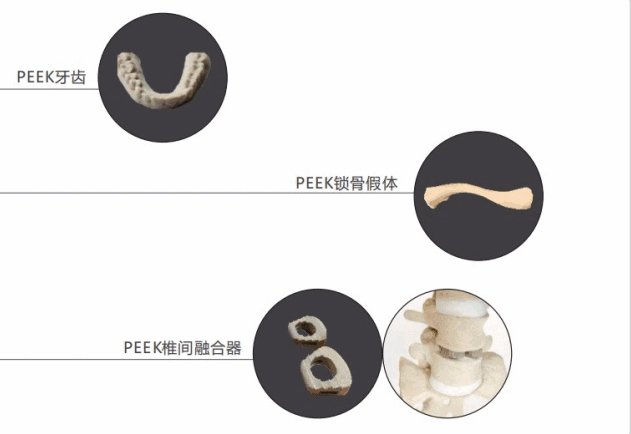
In 2017, the European Space Agency launched a CubeSat small satellite project using 3D-printed PEEK materials, promoting the commercial application of micro-satellites. Qingdao Zhongxinhuamei’s modified PEEK for 3D printing further optimizes processing performance and mechanical properties, supporting aerospace and medical additive manufacturing applications.
Qingdao Zhongxinhuamei’s Tailored Solutions for 3D Printing Modified Plastics
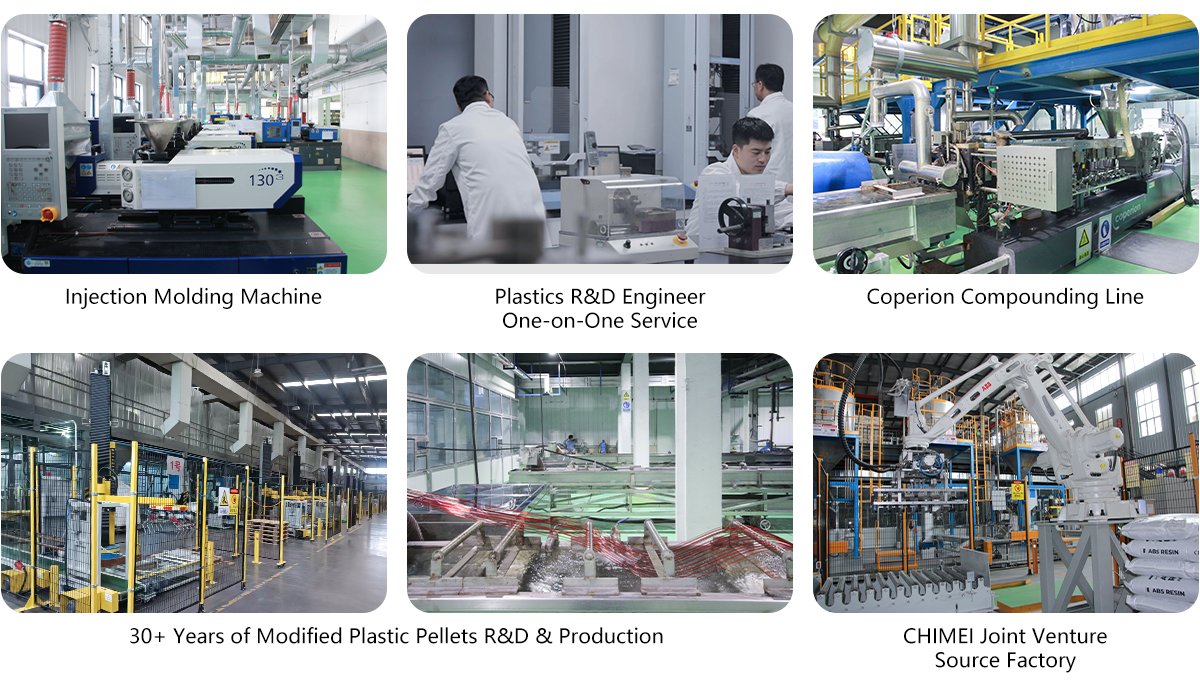
As a professional modified plastic manufacturer, Qingdao Zhongxinhuamei has developed a comprehensive product line for 3D printing, including modified PA, ABS, PC and PEEK materials. Our R&D center focuses on:
Customizing materials for different 3D printing processes (FDM, SLS, SLA) to match fluidity, melting temperature and mechanical property requirements.
Developing functional modified materials (conductive, biocompatible, high-rigidity) to meet aerospace, medical and automotive application demands.
Optimizing processing parameters and providing technical support to ensure stable 3D printing quality and efficiency.
Conclusion
3D printing’s rapid development hinges on breakthroughs in modified plastic materials. By addressing traditional plastics’ processing bottlenecks and optimizing high-performance polymers like PA, ABS, PC and PEEK, modified plastics unlock the full potential of additive manufacturing. Qingdao Zhongxinhuamei’s tailored modified plastic solutions for 3D printing empower manufacturers to overcome technical barriers, expand application scenarios and gain a competitive edge in the global lightweight and high-end manufacturing industry.