
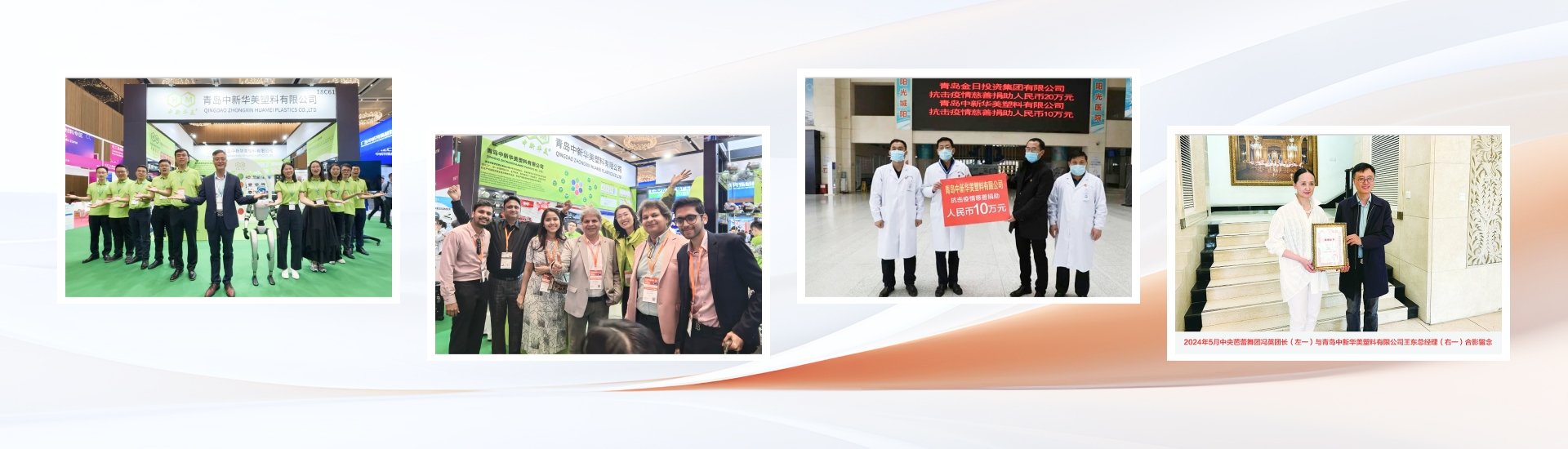
Glass Fiber Reinforced Nylon: Properties, Processing & Applications by Qingdao Zhongxinhuamei
Core Advantages of Glass Fiber Reinforced Nylon
Nylon (PA) is a widely used thermoplastic engineering plastic with high mechanical strength, chemical resistance, oil resistance, wear resistance, self-lubrication, and easy processing. However, pure nylon has limitations: low strength, poor dimensional stability, and low heat resistance. Adding glass fiber (GF) significantly upgrades its performance: Reinforced Toughened Polyamide 6 Resin boosts tensile strength by 2.5 times, reduces shrinkage, improves rigidity, and lowers water absorption, enabling stable operation in high-temperature and high-humidity environments . Qingdao Zhongxinhuamei Plastic Co., Ltd. specializes in customizing such materials to meet diverse industrial needs .
Production Processes of Glass Fiber Reinforced Nylon
Two main processes are used for fiber glass reinforced nylon manufacture: long-fiber and short-fiber methods. The long-fiber process pre-mixes nylon and additives, then feeds glass fiber into the screw via a dedicated inlet for blending. The short-fiber process feeds chopped glass fiber through a side feeder into the barrel for mixing with nylon resin . Qingdao Zhongxinhuamei adopts advanced twin-screw extrusion technology to ensure uniform GF dispersion and stable product quality.
Key Factors Affecting Performance
Interface Bonding: Proper GF surface treatment is critical; poor bonding weakens reinforcement effects .
Fiber Length & Dispersion: Long GF outperforms short GF in strength; uniform dispersion relies on optimized twin-screw shear and speed .
Processing Conditions: Temperature, GF diameter, and type also impact final properties; anti-oxidant systems prevent thermal-oxidative degradation during processing .
Critical Processing Challenges & Solutions
Poor Fluidity: High injection pressure/speed and elevated barrel/mold temperatures are required; add lubricants in formulations .
Thermal-Oxidative Aging: Use anti-oxidant additives to maintain mechanical strength after 1000h high-temperature exposure .
Weather Resistance: Add carbon black for UV protection; Qingdao Zhongxinhuamei’s weather-resistant grades suit outdoor applications .
Applications by Glass Fiber Ratio
1. High-Strength (40-50% GF)
Used for high-load gears and professional equipment parts. Qingdao Zhongxinhuamei’s GF40-50% PA66 offers high rigidity, dimensional stability, and low noise .
2. Medium-Strength (25-35% GF)
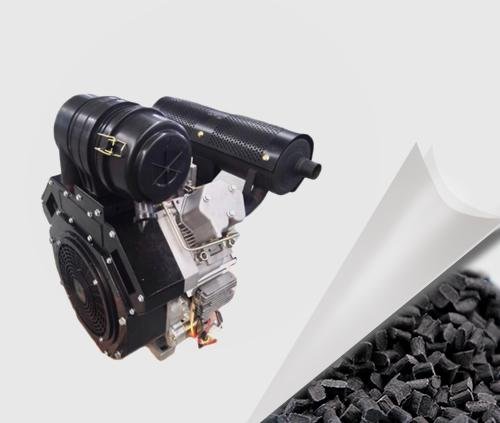
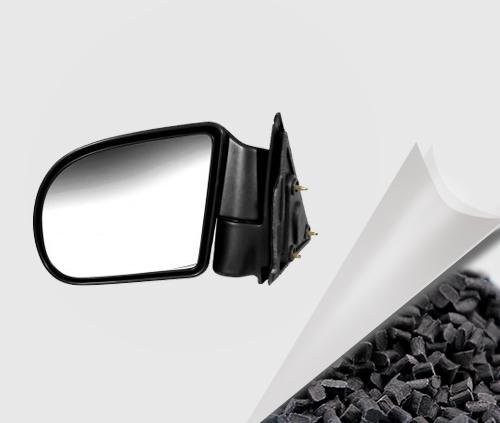
Ideal for auto parts, power tool housings, electronic connectors, and toys. Key applications:
Auto parts: PA66+30% GF for intake pipes (140°C/2000h), chassis parts, and fan blades ; PA66+15%GF+10% talc for air conditioning evaporators .
Electronics: Halogen-free flame-retardant PA66+35% GF for connectors .Qingdao Zhongxinhuamei’s medium-strength grades balance strength, toughness, and processability .
3. Low-Strength (10-20% GF)
Suitable for electronic connectors, touch switches, and medical devices. PA66+15% GF is used in foot drop orthoses, rehabilitation wheelchairs, and medical beds .
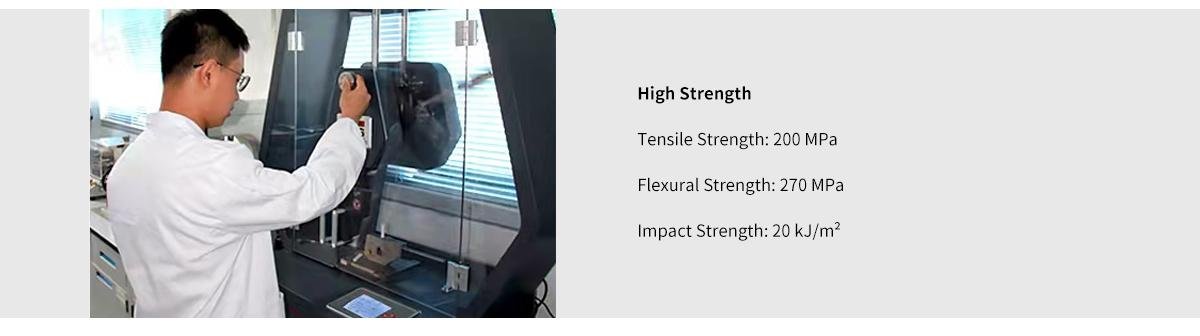 Reinforced Toughened Polyamide 6 Resin
Key Processing Points for 30% GF Reinforced Nylon
Barrel temperature: Increase by 10-20°C (min 220°C) to improve fluidity .
Mold temperature: 80-120°C; wall thickness >3mm use 20-40°C .
Wall thickness: ≥0.8mm (1-3.2mm optimal); shrinkage reduced to 0.3% .
Exhaust slot: ≤0.025mm; gate aperture ≥0.5*t (min 0.75mm for submerged gates) .
Recycled material: ≤25% (≤3 uses); dry before mixing .
Post-molding: Slow cooling in hot water; humidity conditioning for high-temperature parts .
Conclusion
Qingdao Zhongxinhuamei Plastic Co., Ltd. provides high-quality Reinforced Toughened Polyamide 6 Resinand customized glass fiber reinforced nylon materials for auto, electronics, medical, and other industries . Our products address processing challenges and meet strict application requirements, making them ideal partners for manufacturers seeking reliable modified plastics. Choose Qingdao Zhongxinhuamei for your fiber glass reinforced nylon manufacture needs and unlock the full potential of reinforced engineering plastics.